
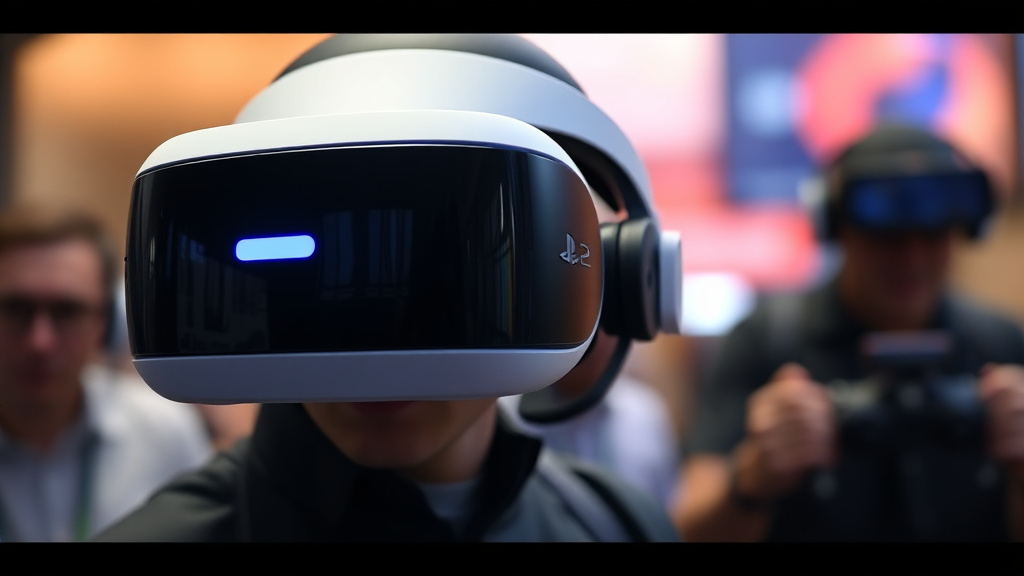
VR gaming has achieved a revolutionary milestone with PlayStation VR technology transforming how players engage with immersive entertainment. By expertly combining advanced technology with innovative software, PlayStation VR delivers remarkable degrees of realism and interactivity that transport gamers into entirely new worlds. This article explores the groundbreaking features, technological advancements, and real-world impact of PlayStation VR, examining how it’s reshaping the gaming landscape and setting new standards for what’s possible in immersive gaming.
Interactive Gaming Evolution
PlayStation VR technology constitutes a paradigm shift in how gamers connect with virtual worlds. By combining high-fidelity graphics with precise motion tracking, the platform creates an unprecedented sense of immersion and presence. Players no longer simply watch game environments; they actively inhabit them, playing through from a first-person viewpoint that feels strikingly lifelike. This core shift deepens player connection and produces unforgettable experiences that traditional gaming cannot reproduce, reshaping player expectations.
The impact of this immersive revolution goes further than pure entertainment. Players describe enhanced cognitive engagement and stronger attachment to game narratives when engaging with them through VR technology. The ability to physically interact with digital spaces—moving your head, extending your arms, and navigating environments—activates natural human responses that strengthen emotional bonds with gameplay. This mental aspect makes PlayStation VR gameplay more powerful and more enduring than conventional gaming, setting higher standards for interactive entertainment quality and player satisfaction.
Cutting-Edge Display Technology
PlayStation VR’s display technology utilizes premium OLED panels that produce vibrant colors and superior contrast performance. The system offers a 110-degree field of view that encompasses player outer visual range, establishing a convincing sense of spatial presence. With optimized refresh rates for smooth motion tracking, the display minimizes motion sickness and guarantees image clarity during fast-paced gameplay. These technical features operate in concert to produce visually stunning environments that preserve immersion throughout long gaming periods.
The advanced optics system in PlayStation VR employs carefully crafted optics that reduce distortion and aberrations across the full viewing area. This optical sophistication allows developers to create expansive virtual worlds with impressive clarity and clarity. The screen system supports HDR content, delivering richer color gradations and more nuanced lighting effects. These innovations work together to guarantee that players experience visually superior gameplay with exceptional image quality that rivals or exceeds traditional gaming displays.
Movement Detection Technology
PlayStation VR’s motion tracking system leverages cutting-edge sensors to monitor player movements with remarkable accuracy and minimal latency. The headset features accelerometers, gyroscopes, and magnetometers that operate in tandem to capture head location and orientation in real-time. Dedicated camera systems boost tracking accuracy by tracking controller positions and hand gestures. This layered system ensures responsive gameplay where player actions transfer directly into in-game movements, removing delay and preserving engagement.
The breakthrough in positional tracking extends to sophisticated algorithms that anticipate player movements and account for temporary tracking gaps. This anticipatory capability enables seamless gameplay even during fast-paced actions or complex interactions. The system’s ability to identify subtle hand gestures allows for intuitive control schemes that feel organic and require limited training time. Players can control digital items, traverse digital worlds, and interact with game elements using instinctive physical movements, creating deeply engaging and accessible gaming experiences.
Improved Player Engagement and Performance
PlayStation VR technology significantly enhances player engagement through its engaging design and interactive game mechanics. The precise motion sensing and haptic response systems create seamless interactions that enhance emotional engagement to virtual environments. Players experience heightened immersion as they physically control in-game actions, resulting in extended gaming sessions and increased satisfaction. This technological advancement transforms inactive entertainment into active participation, where every movement translates directly into meaningful gameplay consequences, fundamentally changing how players perceive and interact with digital worlds.
Performance metrics reveal notable enhancements in player retention and satisfaction rates among PlayStation VR users compared to traditional gaming platforms. The system’s optimization delivers stable frame delivery and reduced lag, removing motion sickness issues that previously plagued virtual reality experiences. Enhanced graphics processing and difficulty scaling systems accommodate varying player abilities, allowing VR gaming accessible to wider player bases. Players note notably higher engagement metrics, with many spending substantially more time in VR environments compared to conventional games, validating the platform’s capability in producing engaging interactive content.
The esports landscape has likewise been transformed by PlayStation VR’s processing power, allowing competitive gaming organizations to thrive within virtual reality environments. Professional-level responsiveness with precise controls draw dedicated players looking for new competitive frontiers. This growth generates new possibilities for player advancement, sponsorship deals, and global community building around virtual reality competitive games.
