
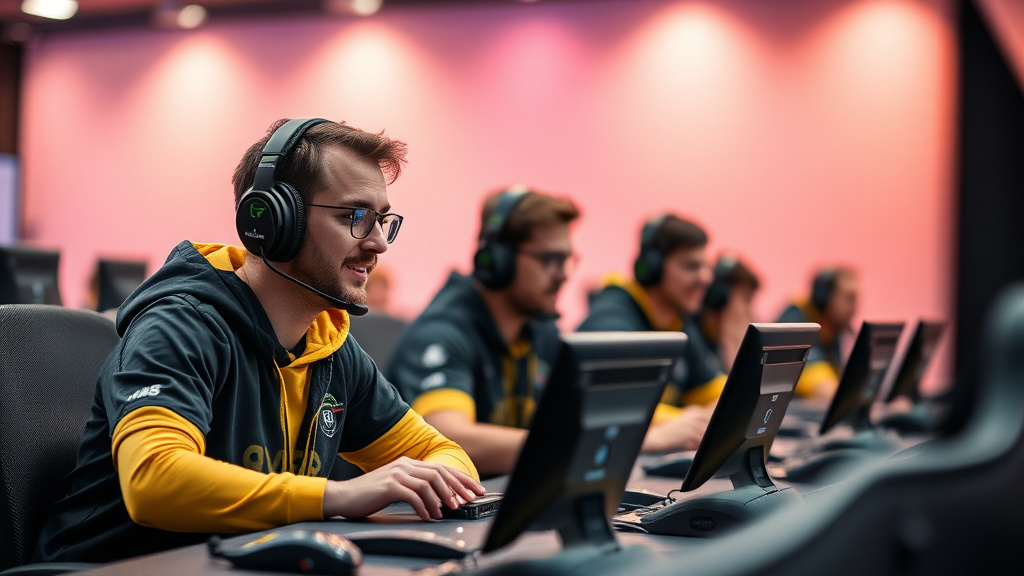
The esports industry has grown into a multi-billion dollar phenomenon, yet many aspiring teams still struggle to compete at the top tier. What separates title-contending teams from the rest? We’ve interviewed elite professional coaches who’ve transformed team performance through evidence-driven training methods. From precision drills and mental preparation to advanced analytics and recovery strategies, discover the proven techniques that convert average players into elite performers and give your team the competitive edge needed to excel.
Organized Training Plans and Skill Development
The Basis of Market Leadership
Elite esports coaches highlight that structured practice schedules form the core of competitive achievement. Rather than endless grinding, professional teams adopt carefully designed training blocks that focus on specific skill areas with precision. Coach perspectives reveal that teams training 6-8 hours daily with planned rest periods surpass those completing 10+ hours lacking organization. This method minimizes burnout while optimizing mental output during critical training windows. Top coaches assign dedicated blocks for technical skill development, strategic analysis, and collaborative drills, ensuring comprehensive development across every aspect of play.
Skill advancement in professional esports demands structured advancement and measurable objectives. Top coaching staff develop customized development plans aligned with player role and performance metrics. They implement role-specific drills that target and develop critical competencies—whether technical accuracy, rapid tactical choices, or map awareness. Regular performance assessments measure advancement against starting performance levels, allowing coaches to modify workout difficulty and focus areas dynamically. This data-driven approach guarantees skill development balanced skill sets while keeping players motivated through visible progress and achievement milestones.
Rest and cognitive focus get prioritized equally alongside active practice in elite competitive programs. Professional coaches understand that peak performance demands sufficient sleep, proper nutrition, and mental readiness. Teams integrate planned rest periods, mindfulness practices, and sleep enhancement strategies into their weekly routines. This holistic approach reduces cognitive fatigue and preserves the mental sharpness essential for elite-level play. Coaches report that teams emphasizing rest and recuperation show 30-40% gains in consistency and decision-making accuracy during tournament play.
Comprehensive Data Analysis and Performance Tracking
Current esports coaching makes extensive use of advanced analytics platforms that capture detailed performance data in both practice and tournament settings. Expert coaching staff employ dedicated tracking systems monitoring player placement, ability usage, resource management, and tactical decision-making habits. This data-driven feedback helps coaches identify specific weaknesses and create focused improvement strategies. Analytics reveal which strategies work when facing certain opponents and what player pairings create peak team chemistry. Organizations using extensive performance analytics regularly show quicker strategic adaptation and better-informed tactical changes during competitive events.
Input mechanisms derived from analytics speed up player growth and team unity markedly. Coaches examine taped practice with players, employing recorded material to demonstrate how decisions affect outcomes and identify areas for growth. This factual feedback minimizes defensive reactions and promotes mindset development among team members. Players understand precisely which actions led to success and which demand change. Consistent data analysis establish responsibility while encouraging joint solution-finding, eventually creating improved team dynamics and shared understanding of best practice benchmarks.
Mental Conditioning and Team Psychology
Strengthening Psychological Resilience
Professional esports coaches highlight that mental resilience sets apart elite teams from rival teams. Title-winning coaches implement systematic mental training programs that develop players’ resilience under pressure. These programs encompass mental imagery exercises, pressure management techniques, and mental strategies designed for competitive gaming settings. Players learn to maintain focus during crucial matches, regulate frustration patterns, and recover mentally following setbacks. Coaches report that teams dedicating resources to mental conditioning demonstrate significant enhancements to decision-making during high-stakes tournaments and exhibit greater consistency throughout numerous matches.
Advanced psychological conditioning extends beyond individual player development to team unity and shared confidence. Coaches utilize pre-game routines, positive reinforcement protocols, and confidence-enhancing activities that build team chemistry. Regular psychological assessments help recognize individual vulnerabilities and strengths, allowing coaches to customize interventions for each player. Teams that emphasize mental conditioning see reduced anxiety, improved communication, and greater ability to execute strategies under pressure, ultimately translating to superior competitive performance.
Team Dynamics and Communication Methods
Strong communication frameworks constitute the foundation of top-tier esports teams. Professional coaches implement structured communication protocols that enhance in-game callouts, limit interruptions, and ensure every player grasps their position. Teams establish custom terminology, clear shot-caller structures, and structured decision protocols. Coaches hold routine practice drills and review footage to detect issues in team coordination. Players practice maintaining composure while conveying essential information, confirming messages stay precise and executable during critical competitive periods.
Team psychology includes relationship development and dispute management mechanisms established by seasoned coaching staff. Strong teams create psychological safety where players are at ease making aggressive plays and admitting mistakes without fear of blame. Coaches conduct frequent team gatherings tackling interpersonal dynamics, establish clear expectations for behavior and accountability, and build supportive environments where helpful feedback strengthens rather than damages relationships. Teams displaying healthy psychological dynamics regularly surpass those with poor communication, directly connecting psychological investment with tournament success.
Advanced Data Analysis and Performance Tracking
Modern esports coaching has surpassed intuition and observation, entering an era where data-driven decisions determine championship outcomes. Professional coaches now utilize sophisticated analytics platforms that capture every aspect of player performance, from response speed and tactical precision to map control efficiency and asset allocation. These metrics provide unprecedented insights into personal capabilities, weaknesses, and collaborative dynamics. By examining thousands of hours of match recordings and match statistics, coaches discover patterns that human observers might miss, enabling focused enhancements that translate directly into performance gains during high-stakes tournaments.
The incorporation of analytics monitoring systems has fundamentally changed how teams approach training and tactical planning. Live monitoring displays show player positioning, tactical deployment efficiency, and resource allocation, allowing coaches to offer instant feedback during scrimmages. Detailed video review tools facilitate shot-by-shot analysis of pivotal situations, revealing instantaneous choices that separated victory from defeat. Teams adopting comprehensive analytics infrastructure continually exceed competitors depending on traditional coaching methods, showing that quantifiable analytics-based approaches substantially improve tactical execution and collective coordination throughout competitive campaigns.
- Record individual player reaction times and precision measurements consistently
- Examine team communication trends through voice and chat logs
- Evaluate economic efficiency and budget distribution throughout gameplay
- Evaluate positioning and map control through location-based analysis
- Track performance trends throughout various patches and different opponents
Elite coaching groups establish detailed performance benchmarks that act as foundational metrics for improvement tracking. These benchmarks cover foundational techniques, strategic choices, and psychological resilience in high-pressure situations. Coaches consistently evaluate individual and team metrics against historical data and competitive benchmarking, identifying areas requiring focused development. By defining precise, measurable targets derived from data analysis, teams build accountability systems that drive player engagement while providing clear advancement routes. This systematic approach converts vague goals into specific outcomes, allowing athletes to comprehend clearly what improvements are required and how their contributions help to team success.
The edge gained via sophisticated data analysis stretches past individual match preparation into sustained player development and hiring approaches. Coaches leverage forecasting models to identify emerging talent, evaluate player development potential, and make informed roster decisions. Statistical analysis reveals which player combinations produce strongest team cohesion and which game plans boost victory margins in matchups with certain opponents. Companies implementing comprehensive analytics frameworks consistently achieve superior results, showing that statistics-informed coaching approaches constitute the modern standard for esports excellence and lasting competitive advantage.
